The aim of this essay is to reflect on a particular form of violence, that caused by the short circuit between faith and religious ethics, between the liberating dimension of the experience of God's love and the need to derive from it a practical ethic that promotes human coexistence and is an expression of that love. In the Christian experience—but also in Judaism and Islam—it is possible for a reversal to take place whereby ethics ends up preceding and judging faith. This is a form of moralism, very similar to religious fundamentalism, made possible by the reversal between the purpose of faith (to live the experience of God's love to the full) and the ways and expressions that should express and realize it in practical life. This reversal occurs when moral action is an end in itself and has lost the criteria of judgment through which moral discernment is achieved. Through the interpretative story of the Decalogue (Ex 20:1-17), the thesis argued in this essay is that moralistic rigor enacts a true form of violence both against the religious tradition it claims to protect and against the believing community, preventing or limiting its dialogue with the challenges of the present that would allow it to keep the experience of faith alive.
In this paper, I am concerned with three key questions:
1. Why are the values of humility, compassion, and justice so essential and destabilizing in interfaith dialogues, especially in times of peace?
2. Why should teaching interfaith dialogue always provide space for the grievances on all sides from past, present (and possibly) future unrest and conflict?
3. How do interfaith dialogue participants in post-conflict settings balance the desire and need for justice with compassion and humility for one’s self, one’s community, and the community in conflict?
To begin to answer these questions, I will first reflect upon the role, limits, and relationships between these three virtues before turning to the aims and goals of teaching these virtues in the context of interfaith dialogue. At issue is whether the failure to embody compassion and humility through interfaith dialogue in times of relative peace and prosperity signal the impossibility or meaninglessness of such dialogue when passions are rife, stakes are high, and vulnerability, rage, and hopelessness abound.
This article examines the role of religion in shaping conflict and peace in contemporary Iran through the lens of gender and Islamic feminist activism. Drawing on a historical genealogy from the Qajar era to the Islamic Republic and to present times, it shows how women’s bodies and legal status have been central to the biopolitical construction of the modern nation and to the contested terrain where emergent gender identities and state violence have intersected. At the same time, the article highlights how Iranian Muslim feminists—scholars, activists, and ordinary women—have articulated internal critiques of patriarchal jurisprudence through renewed interpretations of the Qur’an and Islamic law. These reinterpretations challenged structural violence, promoted legal reform, and generated educational spaces that cultivate critical reasoning and ethical agency grounded in Islamic tradition. Nowadays, rather than offering definitive solutions, Islamic feminism provides culturally situated tools for rethinking conflict, expanding interpretive authority, and fostering everyday practices of nonviolent transformation within the framework of the Islamic Republic.
This article examines religious hate speech as a discursive technology that constructs adversaries through conceptual antinomies, enabling moral disengagement and legitimising exclusion or violence. It draws on interdisciplinary perspectives from philosophy, law, sociology, and theology and discusses significant cases—including the Northern Ireland Troubles, ISIS propaganda, Hindu extremist rhetoric against Christians, and Buddhist ultranationalism against Rohingya Muslims—demonstrating how religious identities intersect with other factors to create hostile narratives. The article explores definitional challenges, distinguishes hate speech from incitement to genocide and blasphemy laws, and examines US and European legal approaches. It reveals that hate speech produces multilayered harms affecting individuals, targeted groups, and democratic processes, with causal factors including ideological antinomies, political manipulation, and social media amplification. The study argues that combating religious hate speech requires moving beyond punitive criminal law to embrace restorative justice, interfaith solidarity, counter-speech initiatives, and educational programs. Only through multifaceted collective efforts can societies preserve democratic values and protect vulnerable populations from discrimination and marginalization.
Within the interconnected conceptual framework of spiritual resistance and everyday resistance, this article analyzes the personal testimonies of Antonio Pampliega, a Spanish journalist kidnapped by Al Qaeda, and Narges Mohammadi, an Iranian human rights activist and Nobel Peace Prize winner, imprisoned by the Iranian authorities. The article describes 1) what specific nonviolent practices they developed to resist conditions of dehumanization and 2) which of those practices were specifically connected with spirituality and/or religion according to their own experience. The phenomenological research method is used to describe subjective experience. The hermeneutical method complements the phenomenological approach to understand and interpret each narrative using meaning-making theory as a framework. The article concludes that in both experiences, spirituality was a fundamental dimension of their nonviolent resistance to counteract dehumanization.
The topic of violence and art can be viewed from many perspectives, from the depiction of violence to people who inflict violence on art. Here, the focus is on the ‘violence in our thinking’. Can one's thinking inflict violence on things? Can cold, scientific thinking, thinking in prejudice, or ideological thinking inflict violence on works of art? Here, we address how this happens and how one can confront this violence against works of art. How can it be healed? Through this, the difference between the violence of Thinking and Thinking as a Battle will be explained. At the center of this argument, we discuss the Contemplative Seeing of the World (Welt-Anschauung) which enables an honest seeing. This means becoming friends.
God at War: how do you read about this difficult topic in the Bible? Biblical language has its own distinctive characteristics and conventions, are you aware of them? Modern and and contemporary exegetical research grapples with the challenges that biblical texts pose on a historical, literary and theological level. This essay presents some exemples of texts and textual issues on the motif of the divine and human war in the Bible, and reflects on the biblical reference to myth, on rhetoric and on the intertwining of historiography and theology. A deep attention to what is inside and concerns the language and imagery employed in each biblical text can help to develop a critical reading able to appreciate the textual reasonings and the communicative force of the biblical texts.
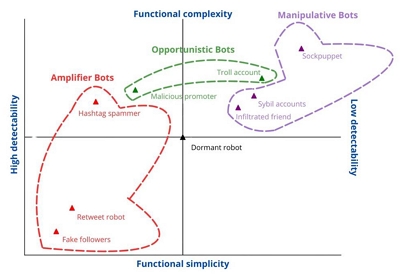
This article examines how social robots, or “bots,” have transformed online interactions and information manipulation, particularly on the platform X (formerly Twitter). It retraces their socio-historical evolution—from early chatbots like ELIZA to AI-driven agents capable of realistic human mimicry. Drawing on the Beelzebot research project, the paper proposes a classification of “malicious” bots according to their technical sophistication, intentionality, and interaction strategies. These bots amplify, polarize, and distort public debate through mechanisms such as astroturfing, fake engagement, and echo-chamber exploitation. The integration of generative AI has produced a new generation of adaptive, persuasive “AI bots” blurring human-machine boundaries. The article highlights how these entities shape information flows, foster disinformation, and undermine trust in institutions. It argues for a socio-technical “archaeology” of bots to understand their evolving power in digital public spaces. Finally, it calls for new multidisciplinary tools—technical, educational, and regulatory—to preserve the authenticity of social interaction and democratic deliberation in the AI era.




 First
First Prev
Prev