Abstract
Creating the collective mural “Poemas para no olvidar” -Poems against oblivion- (2025), at the National University of Colombia, brought together the voices, experiences, knowledge, and actions of young university students. It also involved the participation of those who experienced the trauma of forced displacement, in dialogue with those who are emerging and embracing their identity as artists. The mural, as a collective construction of peacebuilding action, is the embodiment of the profound relationship that connects art, memory, polyphony (c.f.
Bakhtin, 2013) and symbols of visual culture to, through practice, manage forms of artistic expression capable of consolidating collective memories, identities, and the projection of humanizing futures. This study adopts the framework of Multimodal and Multimedia Critical Discourse Studies (MMCDS), centered on the semiotic axis to explore, from combined theoretical perspectives, how collective memory is questioned, constructed, safeguarded, and transformed through murals, as an expression capable of visually representing indexes, iconologies, and symbols that materialize in art. The analysis takes into account the framework of collective memory, peace action, and participatory art.
-
Keywords: MMCDS, Semiotics, Mural art, Visual culture, Collective memory and peace
1. The mural as an embodiment of visual culture rooted in collective memory
An interdisciplinary epistemic reflection is proposed to explain the trajectories of visual culture, serving as a source to explore, articulate, and question: a) pasts and the ways they are remembered, their voices, and their transformations; b) the tensions between what is made visible or concealed, and what is elided or forgotten; and c) strategies for connecting individual and collective memory. Visual culture expresses and delineates identity, weaves together tensions within the interactivity that takes shape through dialogue in public or collective spaces. Through art, visual culture manifests as interactions designed to acknowledge, and make visible emotions, knowledge, and actions.
In this vein, murals, by actualizing difficult and complex visual narratives, bear witness to social and political tensions, fostering multiple interpretations of the viewers, positioned as interlocutor-participants. Furthermore, public mural art opens pathways to reflect upon question and reveal the visible and invisible aspects of collective life. Exploring visual culture entails understanding and making explicit visual devices that materializes topics of common interest to a community, encompassing all forms of signification inherent to human communication (visual-graphic, visual-verbal, visual-auditory, and visual-perceptual, among others), thereby establishing semantic-pragmatic relationships between images, language usage, forms of mediatization, and modes of discursive interaction (
Laugerud, 2015). It is explicitly stated that murals are interactive, polyphonic, and dialogical spaces that contribute to the construction of memories, given that, conceptually, they represent pain, traumas, and losses that disrupt the social cohesion, generating historical ruptures and creating the need for transformation.
Within this framework, the dialogic nature of the mural, like any communicative activity, is realized through signs, in narratives that articulate communities and their pasts (
Erll & Hirst, 2023). This allows us to recognize the ways knowledge is constructed, through the rhetorical and communicative management of interactive spaces, within the context of what is being visualled represented. The mural, a form of visual culture, synthesizes, through art, a multitude of beliefs, attitudes, and diverse ways of understanding social realities. It also gives material form to agency, though the narratives that are being shared.
Studies on murals rarely acknowledge their dialogic value, a perspective essential for grasping the work's polyphonic nature. This entails reclaiming the principle that the act of “dialoguing” recovers the diversity of cultural voices (Bakhtin, 1982). It suggests that integrating a visually perceived, dialogically connected element into the sense-making process, allows emotion and thought-knowledge to flow freely. From this viewpoint, voices find expression in color, design, and form; the multiplicity of voices, within the aesthetic-artistic work, creates a sense of belonging.
Engaging with aesthetic-artistic expressions, like murals, fosters dialogues that lead to the recognition of personal, collective, and historical memory; it creates ways to connect with the ‘otherness’, opening space for social coexistence. It sparks emotional connections, interpreted and amplified through the work, as it is observed, reflected upon, and understood. These connections foster inclusive and solidary relationships. When the semiotic-discursive nature of the mural is placed at the center, the connection linking visual culture to collective memory emerges (
Melianto & Syamsudin, 2024). Artistic representations designed, produced, and distributed within murals share semantic-pragmatic perspectives regarding the reality, as forms of everyday knowledge distribution within the respective communities.
The mural, as a manifestation of public and participatory art, articulates pluralities, differences and challenges in defining how and what should be remembered. These generate a multiplicity of meanings. Through this interaction, the representation of collective memory is shaped, with the mural serving as a focal point for reflection. The mural creates situated meaning, materialized and evoked through the physical nature of its medium, thereby integrating itself into the cultural heritage of the dialogic community that gives it life and existence.
The mural constitutes an act of peace, an aesthetic-artistic expression that, through harmonious and collaborative processes, seeks to transform the social fabric. Centered on values such as solidarity, empathy, and cultural integration, it helps highlight factors that have intensified the conflict while simultaneously envisioning or projecting its peaceful resolution. Narratives like the mural allow us to view internal forced displacement as the result of a structural problem; the alternative lies in creating communities and spaces where human and epistemological connections open the way to new meanings and paradigms regarding the construction of peace.
Drawing on
Lederach’s perspective (2022), conflict transformation involves responding to the flow of social conflict, viewing it as a vital opportunity, rooted in social relationships, to conceive and manage changes that eliminate violence and foster processes of justice, restoration of dignity, and individual and collective reparation. By nature, peacebuilding action is creative, as it requires the activation of divergent thinking (
Ward et al., 2024). Acting involves affective and cognitive processes such as forming new judgments about reality, finding heuristic solutions, generating new questions, taking initiative within participatory practices, and creating new representations of the world. These actions not only enhance human capacities but also strengthen resistance against external or internalized exercises of power and eliminate psychobiological factors that negatively affect vulnerable individuals.
Creativity is an inherent human trait that emerges when assumptions are reinterpreted and habitual ways of acting are questioned, paving the way for new forms of thought and emotional experience. From this perspective, disagreement is not in itself a barrier to interaction, but rather the expression of a need for transformation, or a quest to establish new relationships with the environment and other group members. Promoting communicative actions and fostering social cohesion reduces uncertainty and individual dissatisfaction; at the collective level, it enables the navigation of polarization processes through cognitive flexibility (Lannello et al., 2024). The pursuit of peace as an act of resistance manifests itself, on the one hand, in the social commitment of participating agents who choose to manage organizational structures and, on the other, in the creation of mechanisms for legitimacy through socialization processes that make visible the ideals underpinning the action and establish shared viewpoints that materialize in the semiotic-discursive work.
2. Exploring forced mobility in art that builds memory and peace
Methodologically, empirical, qualitative, and critical criteria are adopted to operationalize collective artistic practices, as visual narratives where workshops and creative processes of a pictorial nature are interwoven. The agency of the participants is integrated in three (3) moments: the participants' actions as they reflect on their status as voices of a lived experience; the materials they use and appropriate to express knowledge and emotions; and, their understanding in order to manage a collective peace action, committing their actions and words to their community and the country. In this sense, the analytical process involves a methodological proposal that integrates and applies principles such as activity, materiality, and reflexivity (
Ahva, 2017).
The aim is to connect the participatory practices of university students, who stand in solidarity with the voices of those affected by internal forced displacement, with processes of memory and meaning derived from peace-building actions. The production of its content involves preliminary sketching and reconstruction until a collective final meaning is reached; this process included, among other practices, participating in debates and making decisions regarding the work's conceptual content, all within the context of the country's specific sociopolitical and cultural constraints.
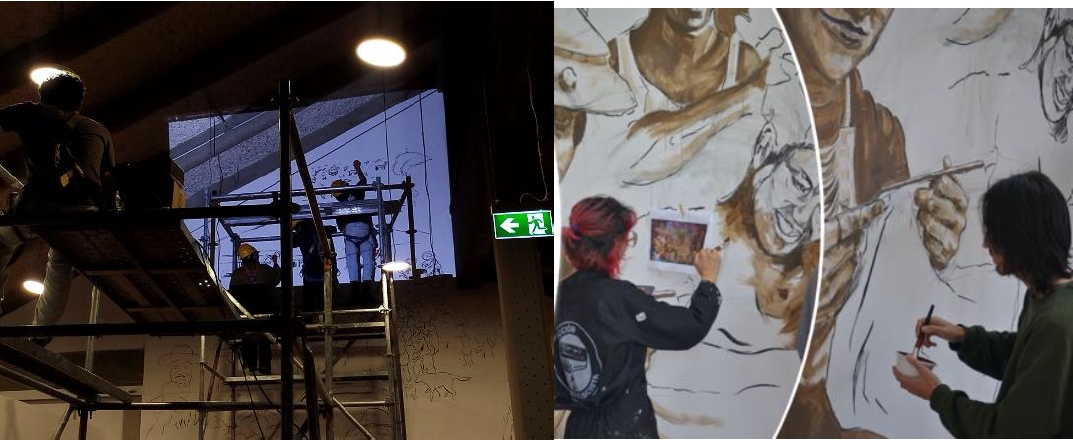
During this phase, participation focused on a creative process that embodied narratives: the creative act involved creating, erasing, redesigning, and painting under the guidance of the Artistic Director, Professor José David Lozano Moreno (Faculty of Arts, National University of Colombia). This entailed a visual-semiotic materialization, managing the relationship between human invention and materiality—a convergence of charcoal, vinyl paints, and grisaille techniques. The process incorporated "non-colors" (white, black, and gray) and prioritized tonal value to define
chiaroscuro effects, highlighting the interplay of light and shadow alongside the application of glazes (transparent layers of color).
In this way, the spatiotemporal relationships of individual and collective practices are recorded, serving as a starting point to explore the origin, reproduction, signification, and resignification of the mural as a dialogic and interactive discursive unit. Reflexivity marks the moment when pathways were found to acknowledge beliefs, emotions, and perceptions, that allow for critical perspectives, evaluation, and emotional expression. This process reshapes the creation of meaning surrounding the physical artwork and the actions that reveal ongoing transformation processes.
The methodological approach derived from observing and systematizing the design, conceptualization-creation, and public sharing of "Poemas para no olvidar”, considering its materiality, activity, and reflexivity. It was an ethnography that engaged with a painful social reality (forced internal displacement in Colombia) and transformed it into an affirmation of human dignity. Consequently, it required analysis of the broad, complex design, integrating voices of pain with the presence of young artists.
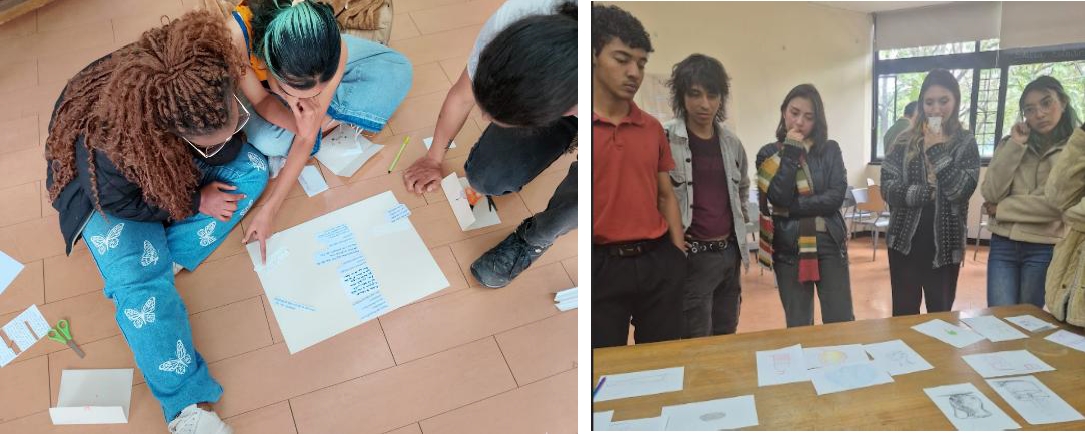
Data collection for this research included: (a) eight (8) workshops bringing together artists and individuals sharing lived experiences, where the meanings and dimensions of human experience were explored and the representation, both individual and collective, was designed and conceptualized; (b) identification of practices, expectations, and perspectives regarding the mural's creation; (c) design of preliminary sketches: observation, analysis, and transformation; (d) sketching and wall-based work: photography, note-taking, and adjustments; (e) painting of the mural; and (f) public sharing: radio interviews, photography, mass media engagement via QR codes, and observation of the dialogic process during visits to understand, read, and interpret the mural.
3. Undertaking a collective artistic work: peace action
The collaborative creation of "Poemas para no olvidar" was part of an effort to develop an interactive process of building collective memory. This process was grounded, in terms of identity and socio-ethical values, in principles of horizontality and dialogue, centering on voices that carry lived experiences, to foster creative, diverse reflections on the consequences of the conflict and the possibilities for its transformation. The symbolic selection and thematic layout of the mural were based on a consensus regarding the actors, living beings, objects, and natural environments that could meaningfully represent internal forced displacement.
The iconological, indexical, and symbolic representation (
Peirce, 1974) incorporates traces of the blood and pain experienced by those who have lived through this phenomenon. Internal forced displacement, understood as a set of actions triggered by legal or illegal armed actors, results from threats and the dispossession of land and belongings (including related crimes). This entails being uprooted from one's environment, leading to psychological and identity-related impacts stemming from a sense of loss caused by abandoning one's territory and, frequently, by the murder of loved ones.
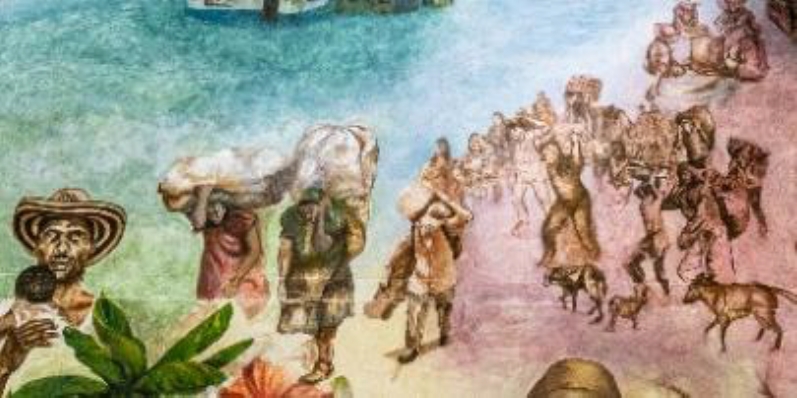
Internal forced displacement involves, on the one hand, expulsion through force and violence and, on the other, arrival in an external community within the same country, often for an indefinite period, leaving behind traces of revictimization. Such forced mobility involves movement to nearby locations, municipal seats within the same region, or intermediate and major cities across the country. In certain cases, revictimization occurs in the host community, whether due to structural violence or persecution by legal and illegal armed groups. Groups formed by individuals experiencing internal forced displacement also exist; these collectives aim to plan for return and demand justice, particularly in instances of mass forced displacement (CNMH, 2015). The mural metonymically and metaphorically recovers the silhouettes of individuals and collectives, people who identify not merely as victims but as agents who, whether in new host territories or upon returning to their original lands, assume prominent leadership roles.
Through the social practices they manage, the social fabric, previously torn apart by conflict, is gradually reconstructed. The web of signs becomes increasingly complex, organizing itself symbolically around the experience of forced displacement; this experience encompasses a profound connection between pain and a sense of hope. Thus, the symbolic dimension transcends the immediate nature of the action itself, establishing a vision for the future that redefines peacebuilding as a process extending from the personal dimension to the collective.
The mural articulates a call not to forget what has happened and continues to happen, while simultaneously highlighting the need to share positive values to empower possible futures. The goal is to achieve a resonance that transcends the artwork's physical space, becoming a vehicle for visibility that drives new conceptualizations of what peacebuilding entails. Notably, the color palette evokes dynamism and vitality, allowing the mural to serve as a celebration of life despite the victimization—which, in the case of internal forced displacement, has affected over nine million people (9.231.020 registered individuals, according to the most recent report by the Victims Unit, August 2026).
According to the 2025 OCHA report, the humanitarian crisis resulting from internal forced displacement severely affects the Catatumbo region, particularly rural areas, through mass displacement, confinement, and restrictions on movement, among other factors. A similar situation prevails in Chocó, Cauca, Antioquia, southern Bolívar, Arauca, and Córdoba, where non-state armed groups, paramilitaries and guerrillas, are responsible for these illegal actions. Armed incursions, the use of explosive devices, and targeted violence gravely threaten thousands of rural inhabitants, overwhelming state capacity and straining the economic resources available to address humanitarian crises. This situation is exacerbated by the freezing of U.S. funds as part of Trump’s policies regarding Latin America.
The graphic composition, realized through symbolic imagery, centers on a semantic-pragmatic core that encompasses expressions of death, transit, solitude, hope, and peacebuilding actions. It thereby reflects the complexity and vast scale attained by both the violence and the resistance that characterize daily life in these territories. The latter has been grounded in respect for life, mutual recognition, and a commitment to collective well-being, all in harmony with the environment and nature. The country’s multi-ethnic character is highlighted as central to the construction of national identity, rooted in peasant, indigenous, and afro-descendant communities that have faced systemic marginalization amidst struggles over territory.
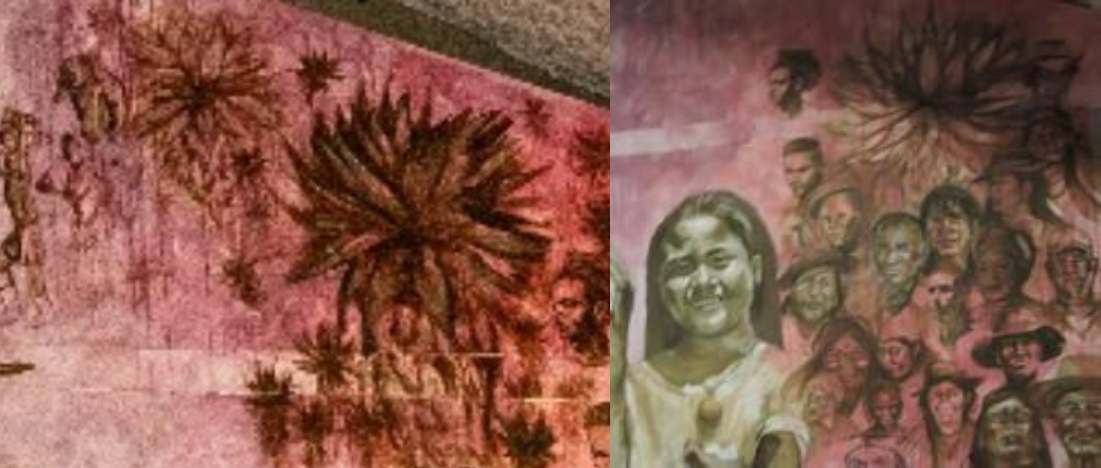
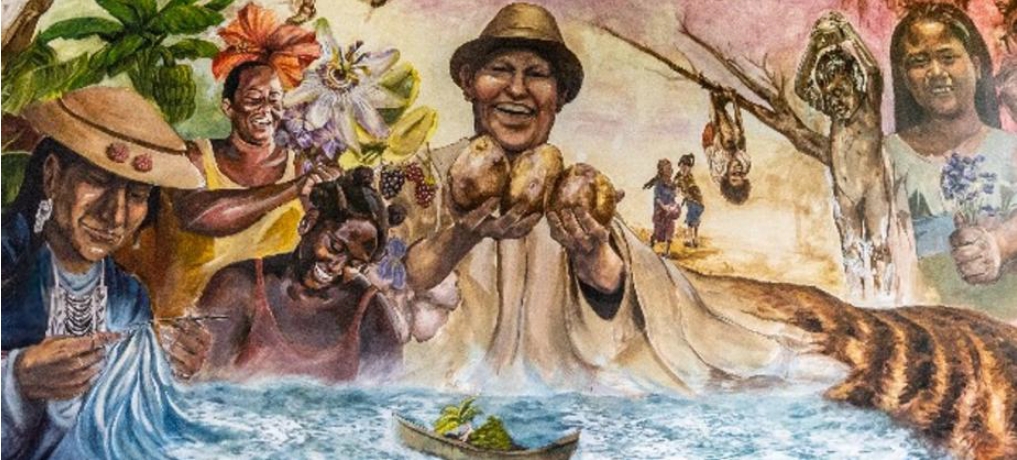
The mural conveys meanings that encompass the defense of food sovereignty and sustainability, centering on values such as environmental and ecosystem protection. These themes are brought to life through visual elements like “frailejones”—symbols of water sources and life itself, despite the ecosystem having suffered the impacts of conflict—and through visual metaphors such as the woman weaving water, which evoke cognitive frameworks linked to the ancestral knowledge of Colombia’s communities.
The "water weaver" figure is an intertextual element linked to the knowledge of the Misak community, primarily settled in the Cauca department in the country's southwest. Their attire includes the “Tampal Kuari”, a hat that holds their thoughts; a wool shawl in deep blue tones; and a white blouse. Their weaving tradition is rooted in the foundational narrative of Mama Manuela, an authority figure and knowledge-bearer whose legacy connects working the land with the practice of weaving; through these acts, meanings regarding creation, care, preservation, and harmony are constructed (
Tunubalá, 2017). The concept of "water weaving" connects to the community's unique worldview, in which lagoons—and waters in general—establish a relationship with the "children of water," allowing their spirits to dwell everywhere from the high-altitude “páramos” to the water sources, thereby infusing vitality into the daily lives of the territory's inhabitants. Their geographical location reinforces this perspective, as they inhabit the west side of the Central Cordillera, a region characterized by rich vegetation capable of storing and regulating water flow. Misak cosmogony regards water as a source of life, a belief that affirms their sense of belonging to the territory as a sacred place.
Other element in the mural is the presence of “frailejones” and bunchgrasses—or “pajonales”, that in the territory play a vital role in “facilitating water infiltration into the soil, reducing erosion, and promoting water yield and regulation by recharging subsurface and groundwater reservoirs” [“facilitar la infiltración de agua al suelo, reducir los procesos erosivos y favorecer el rendimiento y la regulación hídrica mediante la recarga de reservorios de agua subsuperficial y subterránea”] (
Mosquera et al., 2022, p. 2). In “Poemas para no olvidar”, ancestral knowledge addresses the presence of peoples who have developed ways of knowing and understanding to shape collective memories, to preserve and fight for the ecosystems that make up the Colombian territory in all their diversity and multiplicity; and to embody the metonymy of victimization: they are sources of life, yet they weep blood.
The representation of peasant communities is framed by the quest to reclaim agricultural and food traditions capable of sustaining the population through healthy, wholesome production. The symbolic presence of the country’s most iconic crops, such as potatoes and plantains, underscores the urgent need to denounce agricultural practices that have degraded land use, contaminating and, at times, destroying the soil. A critical issue involves food-related practices, including the genetic modification of crops and mass-scale production, which heavily influence micro- and macroeconomic decisions across nations and regions, acting as a transformative factor for sociopolitical conditions.
These practices severely impact local food production and distribution, eroding diversity within regions or traditional agricultural zones. Economic policy has established transnational trade agreements that favor agribusinesses while undermining agricultural practices deeply rooted in local customs. Forms of impoverishment are being created and reinforced for peasant, indigenous, and black communities, particularly in the Colombian context, where, amidst the armed conflict (cf. UN, 2024), land grabbing occurs alongside crimes such as territorial dispossession, threats, targeted killings, torture, enforced disappearance, massacres, and forced displacement. This set of factors has also entailed the transformation of food with consequences that impact human health. Thus, exploring the need to reclaim traditional knowledge implies recovering local sovereignty while building sustainable food security grounded in ethical principles that honor the preservation of life.
Resisting the harm inflicted upon humanity through solidarity involves recognizing traditional knowledge, fostering the connection between communities and nature, and guaranteeing the protection of ancestral wisdom. This relationship ensures the continuity of agricultural, ecological, and medicinal knowledge, linking it not only to scientific foundations but also to the symbolic identity of these peoples. Within this framework, we find the basis for understanding and devising solutions to the socio-environmental problems facing nations worldwide, particularly in Latin America and the Caribbean (FAO, 2020). "Poemas para no olvidar" highlights the link between ancestral or traditional knowledge and agricultural practices, a connection that defines food sovereignty and security for these communities and the country.
Black communities have also suffered severe human rights violations rooted in historical contexts and social representations that have perpetuated discrimination and social exclusion. These situations have adversely affected socioeconomic conditions, a situation exacerbated by mining operations (particularly gold) and externally imposed agricultural activities that place strain on their territories. These factors, combined with inadequate legal and institutional protections, have facilitated processes of mass dispossession (PCN, 2015). According to the Victims Unit (2026), the number of afro-descendant victims stood at 1.315.911 as of August 2026.
Conditions of inequality driven by processes of marginalization and segregation have been exacerbated by the armed conflict. This conflict has involved actions by both legal and illegal armed groups, such as restrictions on population mobility, forced recruitment, sexual violence, and territorial disputes involving threats and killings, among other crimes (Truth Commission, 2022). In this context, "Poemas para no olvidar" serves as an exercise in collective memory. It specifically incorporates the struggles and representations of afro-descendant peoples, who engage in symbolic, judicial, and territorial reparation processes for their communities as part of the broader pursuit of truth, justice, and comprehensive reparation.
The mural envisions peace as a transition toward new spaces rooted in tranquility, stability, and a sense of belonging, framed by alternatives based on dignity, security, respect, and the right to inhabit the territory. "Poemas para no olvidar" explicitly conveys, through the faces of the figures depicted, an aim to foster new forms of emotional connection, satisfaction, fulfillment, and well-being. These arise from imagining a future defined by humanizing conditions where, even if the conflict does not end entirely, the nature of relationships between different social groups might shift. Depicting the individuals cohesively in the foreground emphasizes the need to promote coexistence, not merely in the sense of occupying adjacent spaces, but of knowing and recognizing one another as equals regarding rights and potential. The faces are a crucial element, as they facilitate a connection with the viewer and spark a sense of identification or, at the very least, social commitment.
As the mural’s central focus, the face fosters an understanding of "otherness" and embodies the fundamental principle of sharing experiences, life, and coexistence. Drawing on
Levinas (2015;
Benaroyo, 2022; Imhran, 2025), it is through the face that the need to understand and articulate the conditions of coexistence emerges. The dialogue with the mural facilitates a face-to-face encounter with beings who demand an understanding of their presence, amidst conditions of vulnerability and difference, thereby calling for an ethic that deconstruct appearances and restores both presence and the human condition, the latter interpreted as the ‘face’. In the mural, the face serves as a focal point of meaning and ethical positioning; here, the dialogic encounter transcends personal or collective limitations, grounded in principles and values that center the dialogue on recognition and understanding, thus establishing an ethics that challenges, questions, and defines itself through our own humanity.
Levinas refers to the face as a non-objective quality. It is the concrete presence of the other, like the other, does not exist as an object that constitutes the subject's cognitive world. (…) Levinas, through his phenomenological analysis of the other's face, imparts the feature of intentional transcendence. This transcendence implies, on the one hand, that the other can always remain the absolute other and cannot be comprehended, and on the other hand, the self can only exist as an ethical subject bearing responsibility in a face-to-face relationship with the other (
Chuyue Zu, 2024, p. 284).
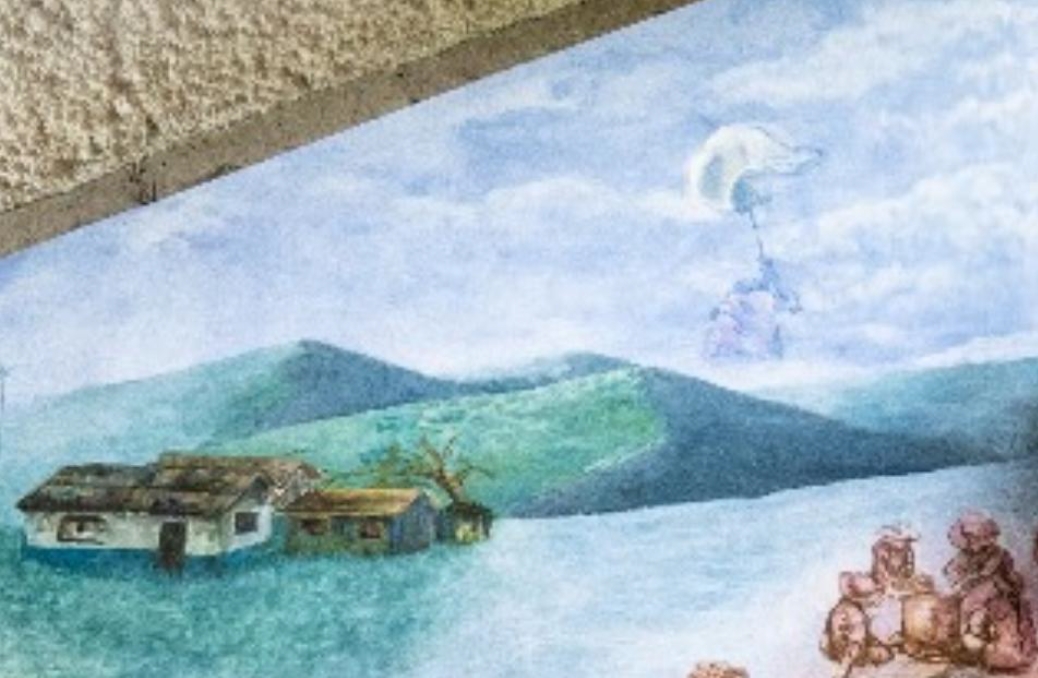
Unraveling the mural's potential for conveying meaning is possible by interpreting the iconology and symbolism it embodies, such as the figure bearing the flag of peace—thereby making it possible to identify how the iconographic elements running through the work are socially perceived.
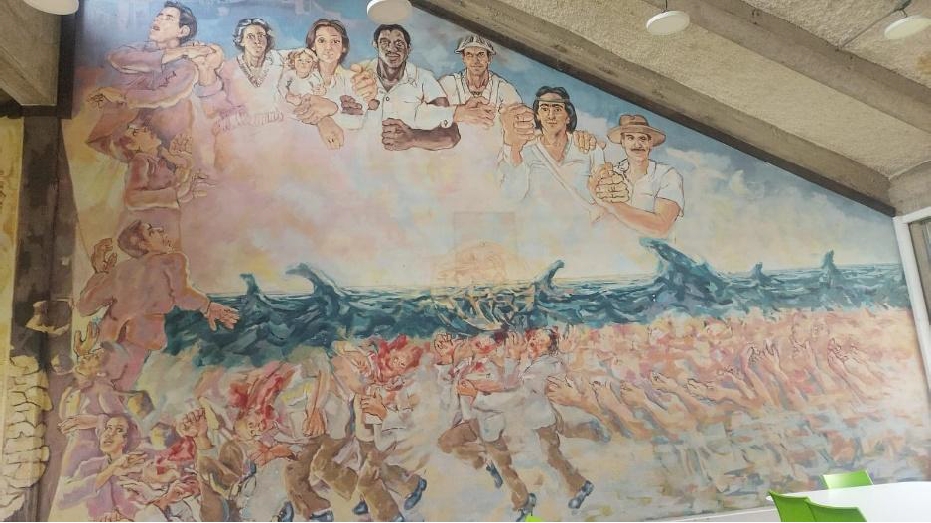
The mural, located in the west side of second floor of the Central University Restaurant “Chucho” León Patiño, has an intertextuality with a mural located in the east side of the Restaurant: the mural “Renacer” (Rebirth) -1983-, which brings into the present the issue of forced external migration across the Mediterranean, a route where thousands perished while fleeing their home countries due to armed conflict. The University Cental Restaurant fosters coherence across both physical and imagined spaces, taking concrete form in what might be termed a ‘corridor of memory’. This corridor serves as a reminder and an act of renewal: acknowledging and confronting the effects of structural violence, while honoring those who suffered it (whose lives could not fully unfold), and those who persevere in their daily lives to build a better country and society.
Art serves as the dynamic core that breathes life into new forms of semiosis, actualized through the gaze, particularly that of students who, without necessarily being direct victims themselves, have lived through, bear witness to, or are aware of the horrors of the past. In university life, or at least in the act of sharing space with others in the public realm, they find the possibility of feeling included, heard, and supported, becoming active participants in the community that embraces them.
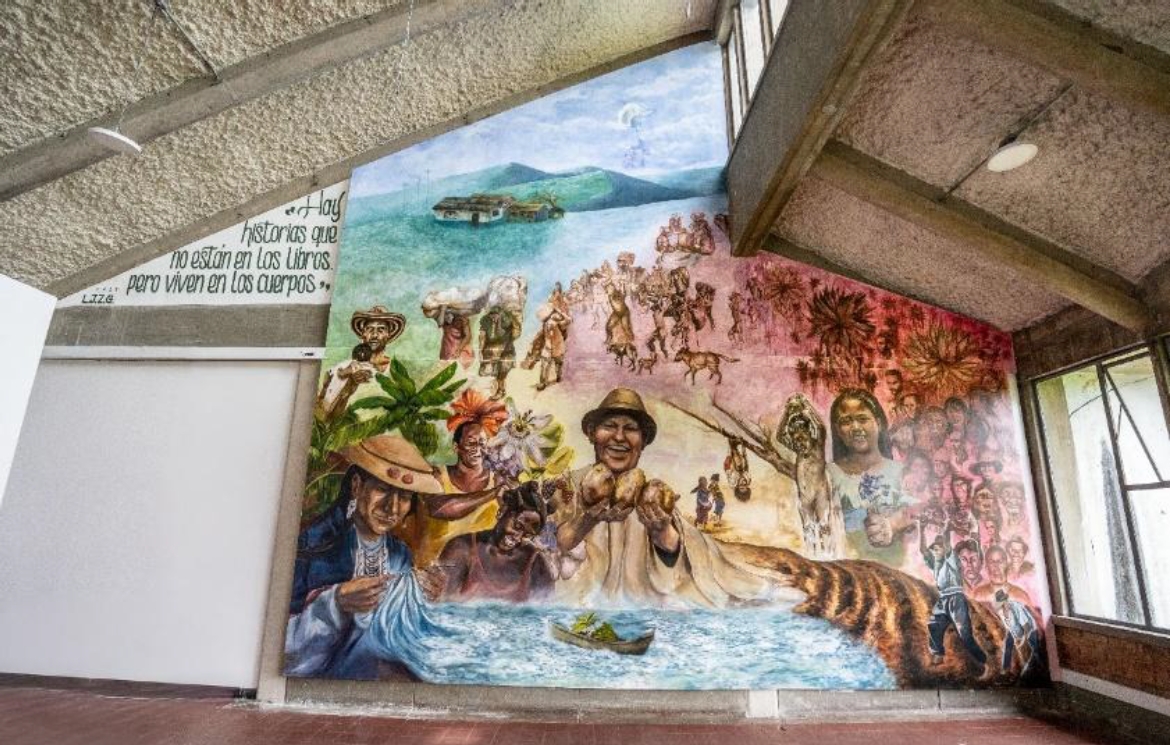
In this sense, the mural transcends the official historical record; it situates and contextualizes the aesthetic-artistic dimension in the service of an ethical-political construction of community. This is evidenced by the verbal expression accompanying the mural, signed by one of the students involved in its creation: “There are stories that are not in books, but live in bodies (Hay historias que no están en los libros, pero viven en los cuerpos”. The mural’s epistemic dimension recovers a form of reflexivity that aesthetically framed as ‘symbolic realism’ (cf.
Terao, 1999;
Hernández, 2020). This is understood as an artistic-narrative style integrating descriptions of everyday life with the use of indexes, icons and symbols to convey complex meanings, regarding phenomena such as violence and peace. It operates from an intersubjective perspective: representations of elements of reality are used metaphorically and metonymically to evoke underlying emotions, ideas, or existential realities.
Symbolic realism activates a hermeneutic framework intended to engage people both rationally and affectively through images that have circulated in the media and played a key role in collective representations. It transforms these images into catalysts for reflection on the implications of social identity, life, coexistence, and the experience of being situated within a territory and in motion. This motion is understood not merely as forced displacement, a physical and geographic event, but also as a process that has led to the epistemic marginalization of certain groups. Through acts of self-affirmation and the support of solidary communities, these groups have managed to reclaim a social space from which to engage in dialogue and see their perspectives realized.
The symbol becomes a materialization or condensation of a community’s principles, values, and imaginaries regarding what it considers its own. This fosters relationships not only with the symbol itself, but also with others who share a similar worldview, establishing networks and new hubs. Through these connections, social practices are formulated and renewed, allowing for the reweaving of collective life. Running across the celestial vault with the flag of peace connects hope, resistance, and the struggle for a life of dignity. Symbolizing is a cognitive task that, within the mural, transcends the routine of automation; it seeks to interrogate new meanings emerging within the framework of social life. For
Sperber (1988), it is a cultural system that creates and maintains social bonds and can become a form of resistance against a power structure attempting to neutralize it. When undertaken from the grassroots level, symbolic immersion allows for challenging dominant narratives and questioning historical and cultural accounts, thereby opening new horizons of meaning in a country marked by an ongoing conflict spanning over seventy years and persistent historical inequalities.
"Poemas para no olvidar" reconstructs a silenced aspect of the national narrative. This narrative acquires new meaning by bringing memories of historical junctures to life through ongoing dialogue and a succession of visual narratives; the composition, viewed through an aesthetic-artistic lens, activates imagination, enabling the creation of a narrative alternative to institutionalized official versions. Furthermore, it serves as a testimonial reference, connecting the individual and the collective, weaving a multimodal "poem" into the mural. While predominantly visual, this poem is integrated with verbal messages and a soundscape created ad hoc to ensure an immersive experience.
The ethical dimension, also rooted in reflexivity, is linked to the communicative purpose of taking a political stance against violence and its social representation. It explores the connection between human beings through the body and the senses, fostering a collective decision-making process that leads to collective action. Students, acting as voices and artists, assume the role of agents of change. Through conceptual and technical discussions and exchanges that materialize in the acts of sketching and painting, they incorporate gestures, movements, thoughts, and reflections.
This reveals a multidimensional process in which agents adopt various roles to offer an individual perspective, one rooted not merely in pure rationality, but also in dreaming, desiring, and imagining possible worlds. This activates the ethics proposed by
Honneth (2007), which posits that self-recognition of social groups is a crucial first step toward ensuring equitable and inclusive conditions across the many spheres of social life, thereby enabling the attainment of individual and collective autonomy and self-determination. "Poemas para no olvidar" is a dialogic act that integrates epistemic, ethical, and aesthetic dimensions. Here, a web of signs fosters action and cognition, synthesized into a visual unity that articulates the compelling presence of the interlocutor. As the viewer approaches the mural draw inferences, reading and interpreting the work through unexpected pathways of knowing and understanding.
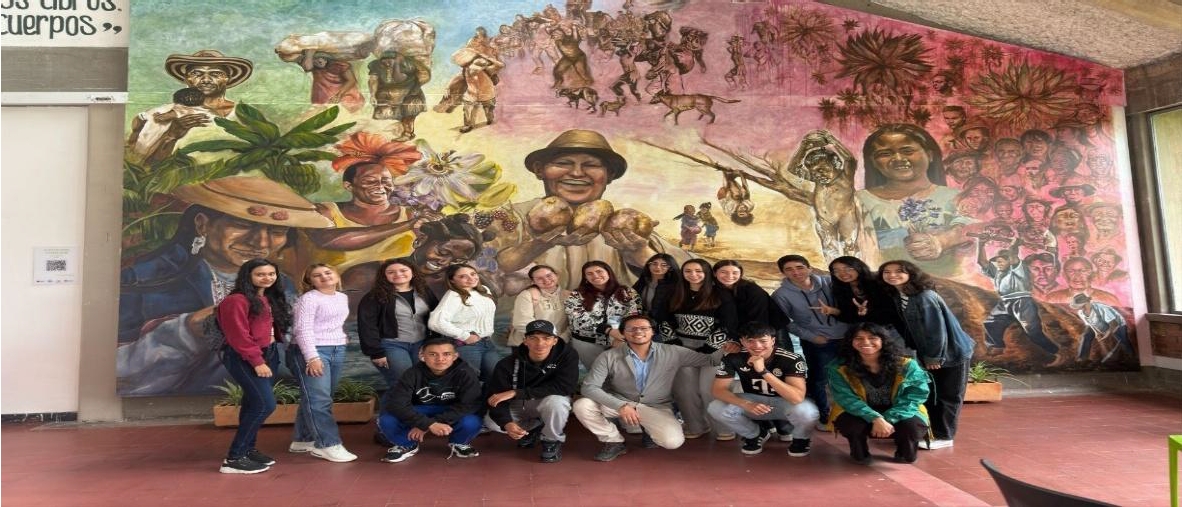
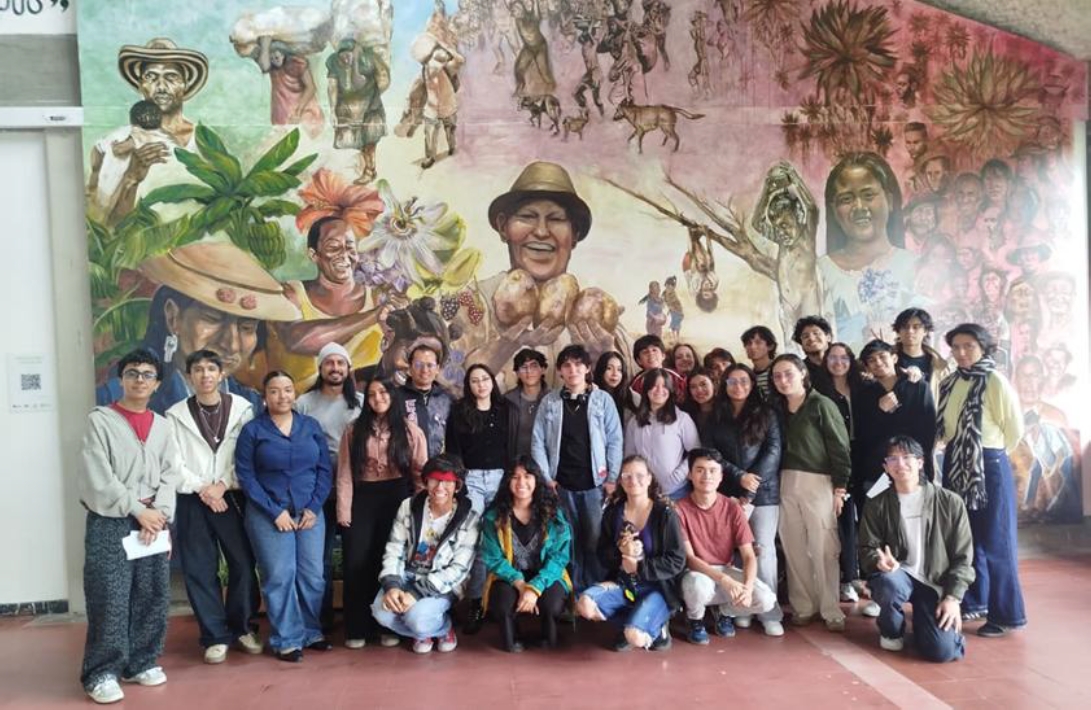
The mural has been visited by students, members of different universities, who at the end of the visit have left different reflections about their interaction with the mural. Attentive visitors and readers of the mural inferred the communicative purpose and expressed the strength of this emotional connection, which correlated with the positive value they assigned to the work.
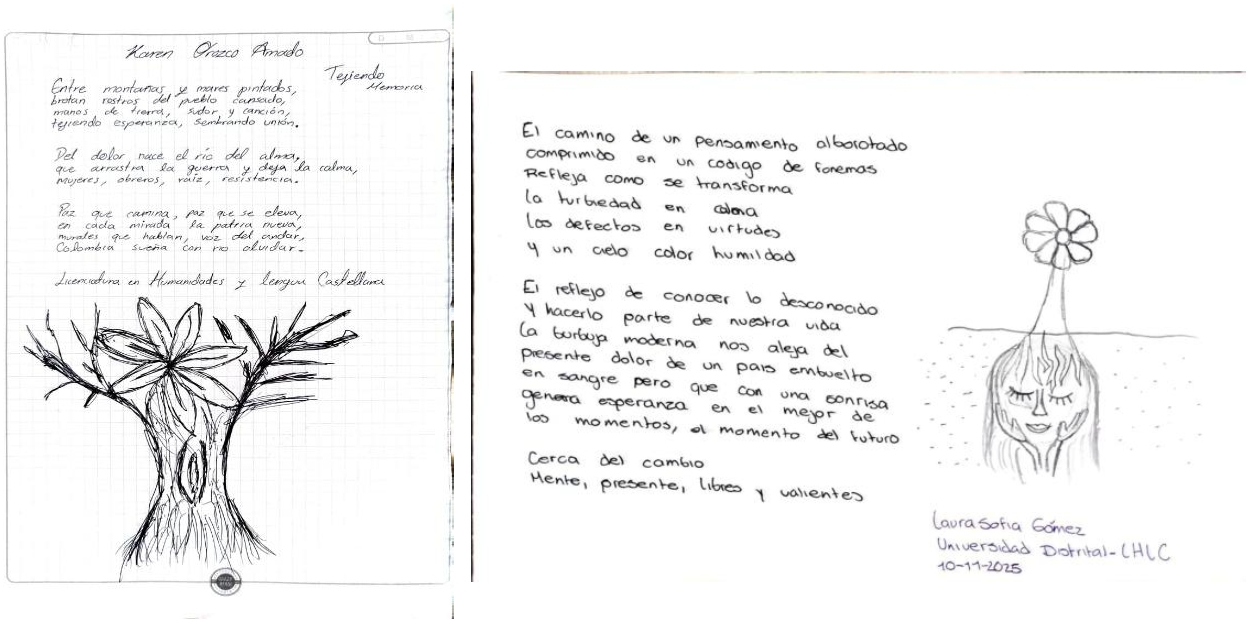
Pelowski et al. (2018) demonstrate that art effectively communicates the artists' emotions to the viewer when the latter can recognize their own emotional experiences and discover the intensity imbued in those feelings, captured in the brushstrokes of the work. When participants identify their own emotions, they feel empowered, linking those emotions to the interpretive process that unfolds as they observe and comprehend the artwork. This process of connecting with the piece generates meaning and bonds of authenticity based on genuine interactions; these interactions reveal levels of engagement and potential ways of understanding and feeling the experience of forced displacement, even without having witnessed or been direct victims of the phenomenon. This means that visitors can go beyond merely recognizing compositional elements; they expand the horizons of interpretation, making their own sensibilities visible to construct new readings. In this case, with the help of a mediator from the University (Juana Gutiérrez), interlocutors have been able, through a workshop, to create pieces of creative multimodal reflections about the mural.
In this sense, the viewers also become creators, as they produce new forms of semiosis—realized multimodally and intertextually through expressions such as drawings, poems, and reflections—that serve as a starting point for new conceptualizations of peace. From the perspective of the young visitors, “Poemas para no olvidar” evokes different emotionalities, including pain and nostalgia, anchored to the memory of what has been experienced- The resource used is connected with the symbolic meaning of colors: "Red burns like the wound, green sings hope, yellow lights up memory. The shadow is not the absence: it is the root; it is the mark of what insists on living" [“El rojo arde como la herida, el verde canta esperanza, el amarillo enciende la memoria. La sombra no es la ausencia: es la raíz, es la marca de lo que insiste en vivir”] (reflection of one of the visitors). In the works produced, senses of expectation and commitment to carrying out actions that contribute significantly to the construction of memory and the consolidation of peace in Colombia are also recovered, recognizing the value and role of memory in these processes: "it drives us to generate a change that impacts the perception we have that we are, only with a weapon in our hand. Within us is the power to build a country that commemorates the victims" [“nos impulsa a generar un cambio que impacte a la percepción que tenemos de que somos, solo con un arma en la mano. En nosotros está el poder de construir un país que conmemore las víctimas” (words of another visitor).
The student, acting as both reader and viewer, perceives that “Poemas para no olvidar” does not represent the envisioned present or future, but rather the ways of life, experiences, and places torn away by the armed conflict: “What moved me most was the left side of the mural, where one can see various symbols of identity reflecting what people suffering forced displacement leave behind” [“Lo que más me conmovió fue la parte izquierda del mural donde se pueden observar varios símbolos identitarios, que reflejan lo que las personas, que sufren el desplazamiento forzado, dejan atrás””. This highlights the perception of a history of resistance against the violence of internal forced displacement, recovering elements that propose and underpin the construction of identities, traditions, and ways of life in the pursuit of well-being: “The bricks represent resistance—a refusal to abandon what is meaningful in their lives: traditions, livelihoods, communities, and cultures” [“Los ladrillos son una representación de resistencia por no abandonar aquello que es significativo en sus vidas: tradiciones, trabajos, comunidades y culturas”].
From another perspective, one participant notes: “The phrase inscribed not only on the wall but across the entire mural makes me reflect on how memory manifests not merely in physical space, but in bodies, faces, flowers, plants, animals, children, and all those whose lives were deeply affected” [“la frase plasmada no solo en la pared sino en todo el mural me hace pensar en cómo la memoria se puede ver no solo en un espacio físico, sino en los cuerpos, las caras, las flores, las plantas, los animales, los niños, y todos aquellos que fueron atravesados”].The participant acknowledges the vital role that acts of memory-building play in bringing us closer to our country’s history and contributing to peacebuilding: [...] “Ultimately, this mural makes me feel that memory is not a burden but a bridge; and that by crossing it, something within us will change forever” [“Al final, lo que este mural me hace sentir es que la memoria no es un peso: es un puente y que, al cruzarlo, algo en nosotros cambiará para siempre”].
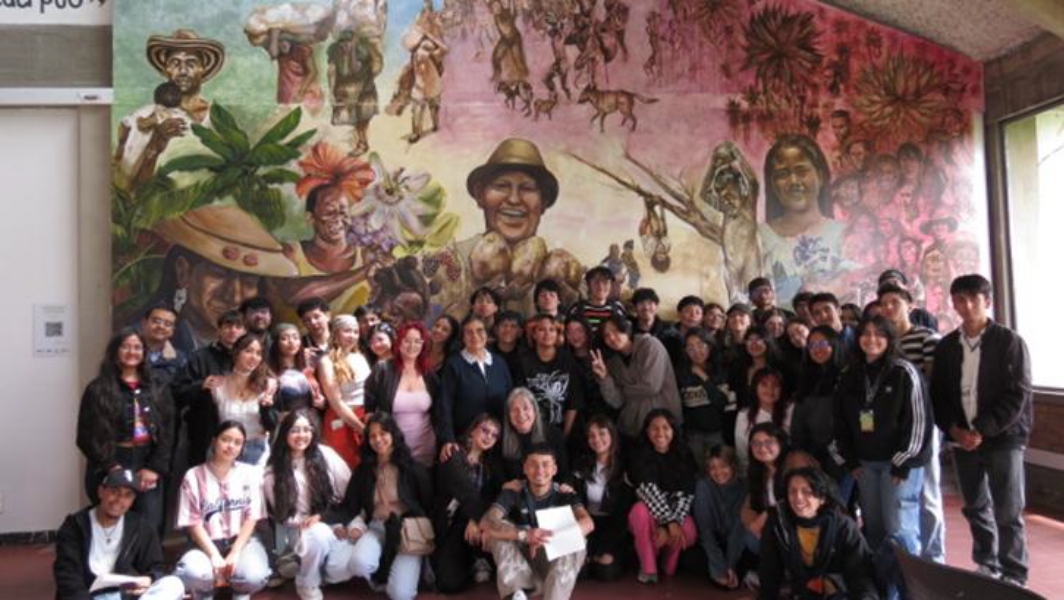
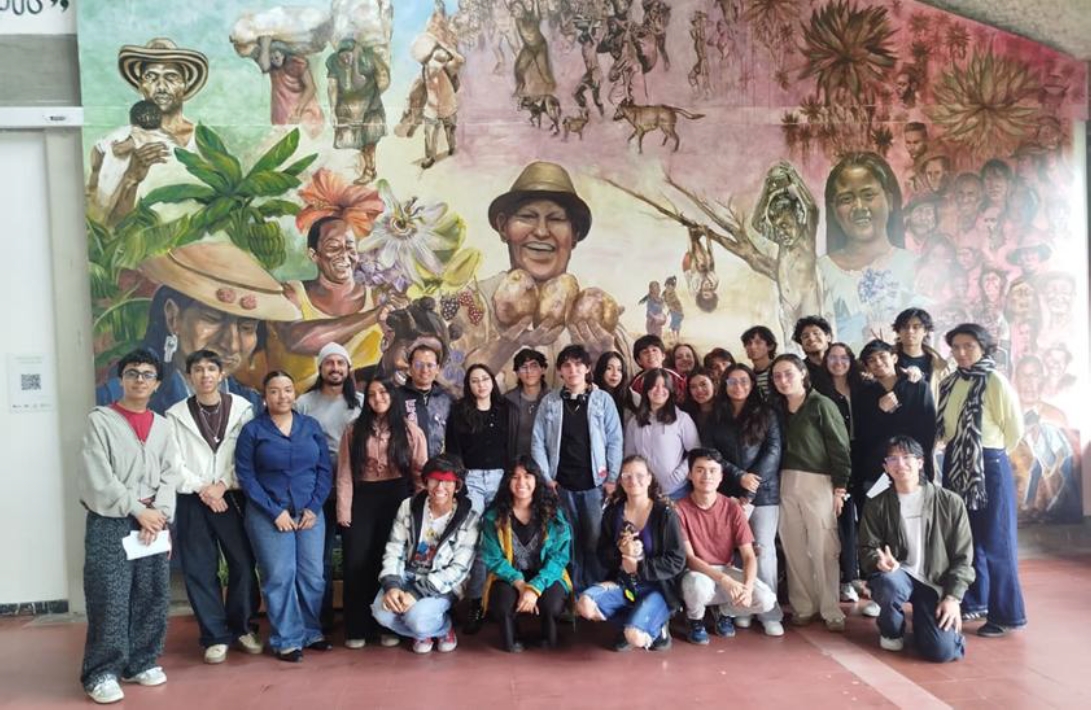
The presence of undergraduate industrial design students from National University of Colombia-Bogotá, accompanied by Professor Juan Mendoza-Collazos, fostered an intergenerational dialogue. It brought together first-semester students and faculty members who had experienced the central dining hall before its closure in the 1980s. The gathering was marked by nostalgia and deep emotion, aligning with a collective sentiment in a space now reopening to become “the heart of the University”—a place where, through the sharing of food, encounters evolve into bonds of friendship and solidarity. This dialogue facilitated a deeper reflection on the site and reinforced its role as a corridor of memory within the University.
The interaction reclaimed the essential connection between the art embodied in the mural and memory—a source of multiple interpretations, each charged with a diverse array of emotions and meanings: “When looking at the mural, one experiences a rollercoaster of emotions and interpretations. It features a collection of illustrations evoking feelings of sadness, struggle, and resistance, contrasted with cheerful, colorful imagery”. [“Al momento de mirar el mural se siente una montaña rusa de emociones e interpretaciones. Tiene un conjunto de ilustraciones que evocan sentimientos de tristeza, lucha y resistencia, contrastada con ilustraciones alegres y coloridas”. During the conversation, the figure, blurred between sky and clouds and bearing a white flag, was proposed as a symbol of hope and peace: a horizon helping to build a path that transforms terror into actions of reclaiming territory, moving beyond violence, and engaging in resistance. "The armed conflict is an issue that has plagued the country for so long that we sometimes seem to have normalized it; yet, amidst the news and information, the names and faces of the true victims have been lost, something we cannot afford to forget" [“El conflicto armado, una problemática que ha estado ya tanto tiempo en el país que, a veces, pareciera que la hemos normalizado, pero entre noticias e información se ha perdido el nombre y rostros de los que verdaderamente han sido víctimas, es algo que no nos podemos permitir olvidar”].
4. Conclusions
Public art, a meeting point for students, visitors, and communities, enhances the understanding of pictorial narratives rooted in both past and present. Through artistic expression, it reveals the tangible accessibility of collective memory as it traverses the vital spaces of university public infrastructure. The mural revitalizes the dynamic interplay between visual culture, heritage (expressed as pictorial narrative), and a socialization process that engages a broad audience.
As a form of public art, the mural activates collective memory regarding traumatic events centered on internal forced displacement. This phenomenon, rooted in over seventy years of internal armed conflict, impacts the country’s most marginalized communities: indigenous, afro-descendant and rural populations. The semiotic-discursive representation of internal forced displacement emerges from the materialization of shared experiences and intersubjective knowledge. Multiple voices and perspectives flow into the artwork, finding a home in a university cultural space like the Central Restaurant. Socio-emotional rupture, uprooting, and the loss of assets, territory, and stable socio-affective bonds, serve as a framework for understanding the severity of this victimization that affects every aspect of the victim's life experiences, symbolically reflected in the work "Poemas para no olvidar".
As both a space and a medium for collective memory, the mural communicates ideals and expectations that challenge the status quo. It fosters alternative interpretations of the past to build a present and future defined by peaceful coexistence. From this perspective, artwork, leveraging the visibility inherent in art, sustains awareness over time. Through forms and images, it reveals the invisible, bringing to the present what cannot otherwise be seen: the colors, designs, and imagery that evoke memories and prompt systematic reflection—grounded in the icons, indices, and symbols reclaimed within the mural. Through these brushstrokes, our history of pain is reclaimed, while the identity that is uniquely ours simultaneously blossoms.
"Poemas para no olvidar" bears witness to the transformative power of art to forge a sense of belonging by reclaiming the essential nature of history that defines us. The creation of this collective mural is an act of peace; beyond synergistically weaving together a multiplicity of voices, experiences, forms of knowledge, rationalities, and emotions, it stands as the fruit of the young creators' commitment. The dialogue and convergence of narrative elements transform the mural into a space of interaction that not only gives tangible form to ideals of peaceful coexistence but also actively fosters dynamics of change through solidarity-based encounters with others and the recognition of diverse identities.
The work serves as an act of resistance against oblivion, pointing toward ways to reconstruct meaning within a society fractured by internal armed conflict. "Poemas para no olvidar", which fosters a profound connection between visual artistic creation and ethical-political sensibility, seeks to establish human and epistemic bonds that promote collective action rooted in solidarity. This is reflected in the unfolding of meanings that occurs as the mural is shared with the community; this process opens new interpretations, amplifies the work's polyphonic nature, and enriches the way the elements it presents are understood.
Figure 1.Collaborative practice of sketching on the wall (Own photos)
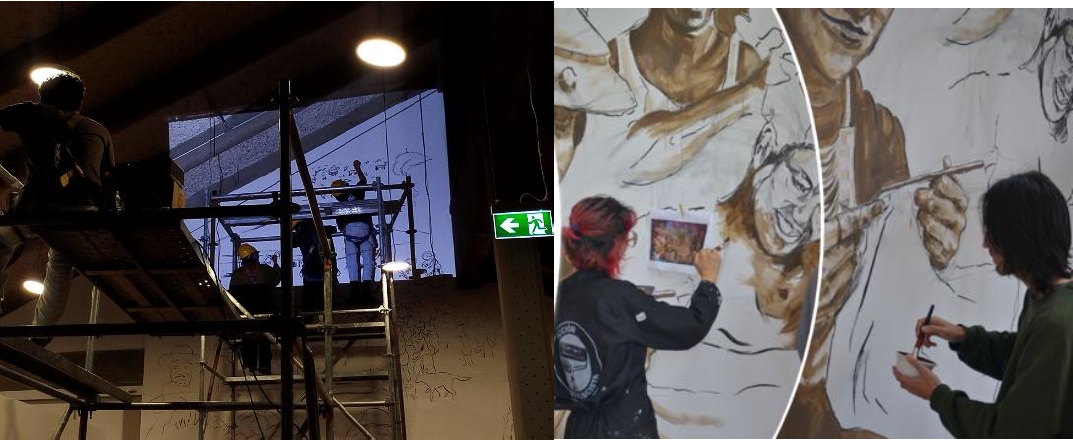
Figure 2.Aesthetic-artistic workshops for the conceptualization of the mural
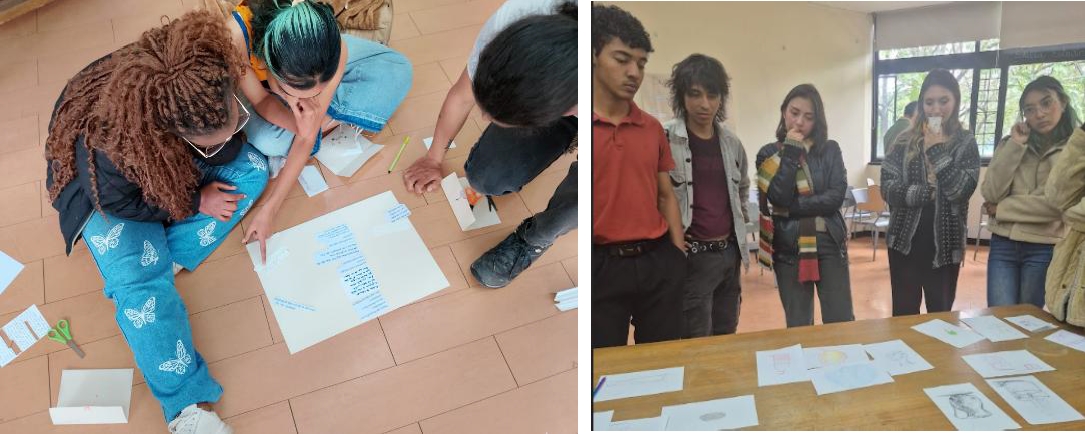
Figure 3.Groups experiencing forced internal displacement
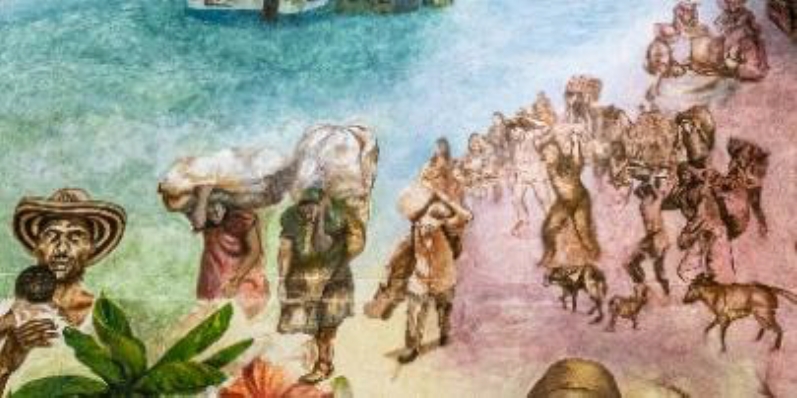
Figure 4.“Frailejones”: the victimization of nature
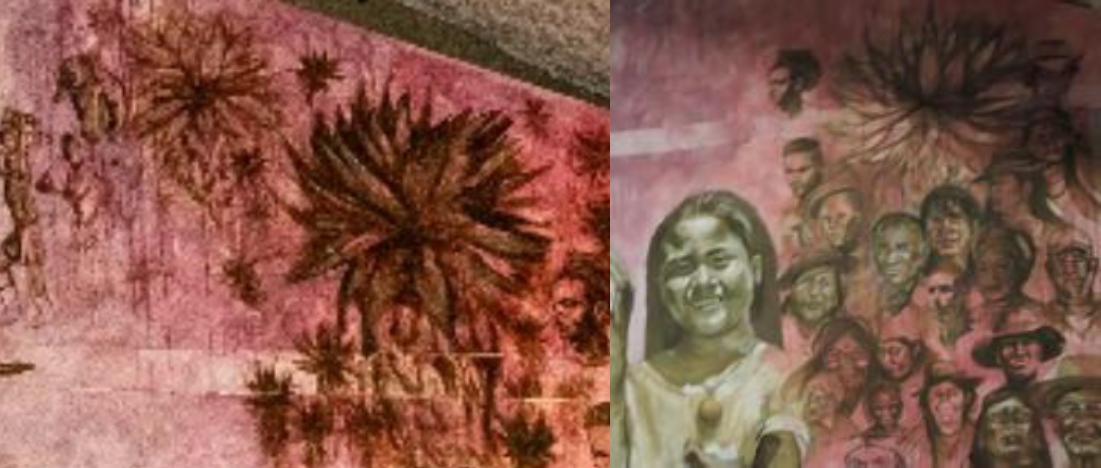
Figure 5.Diverse identity representations in the mural
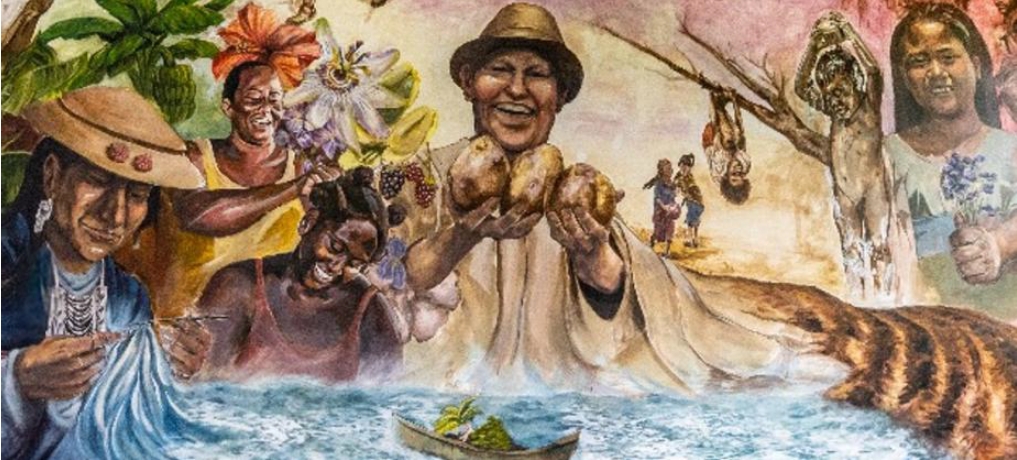
Figure 6.Iconography and symbolism of peace in the mural
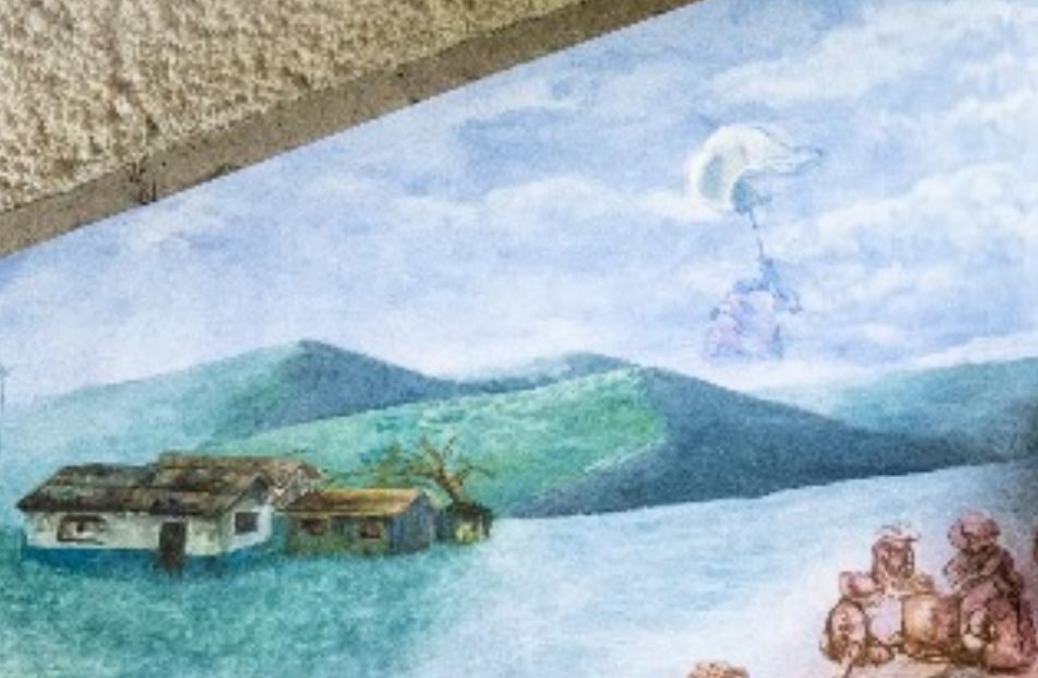
Figure 7.Intertext with the mural created by Víctor Manuel Tapias (1983)
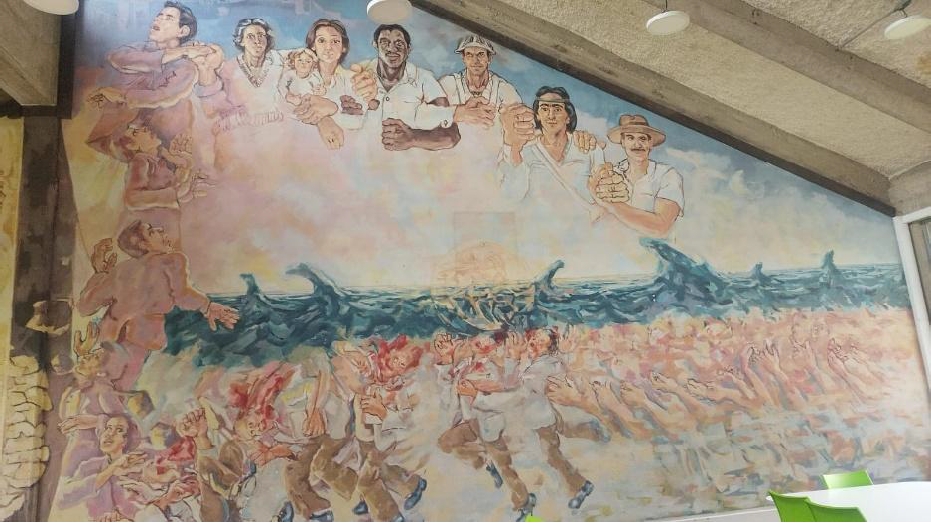
Figure 8.“Poemas para no olvidar”: front perspective
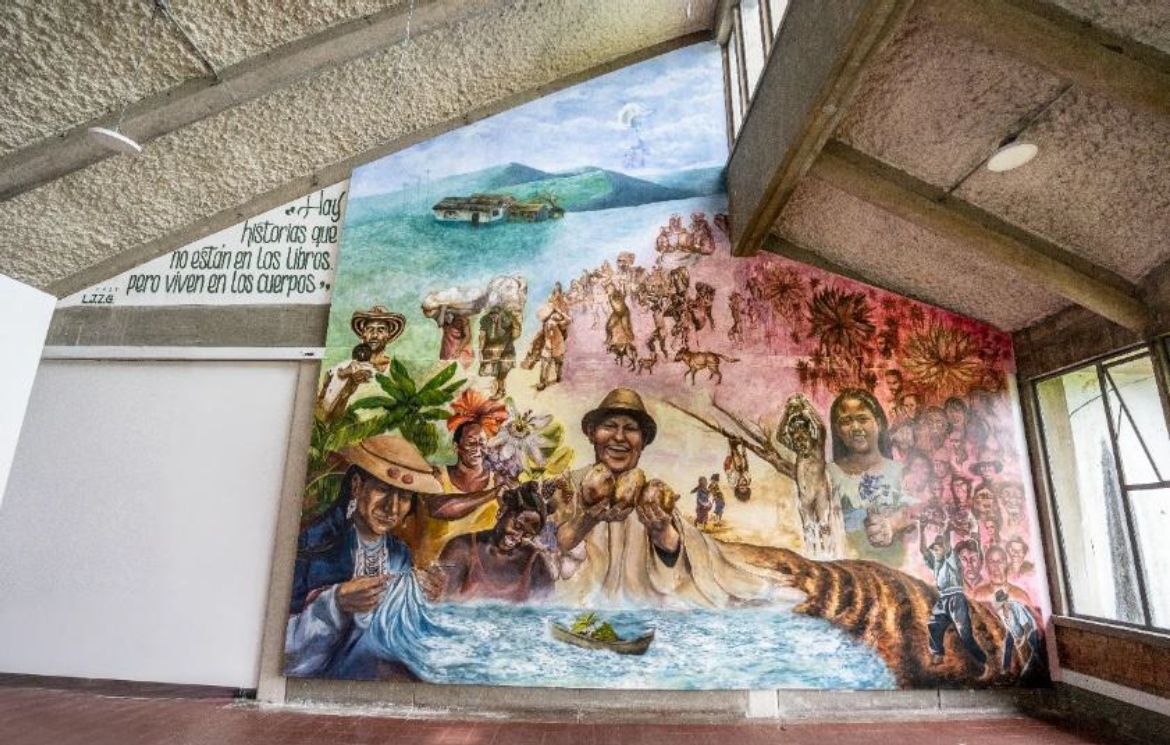
Figure 9.Visit by students from Universidad Distrital (accompanied by Professor Sol Castro)
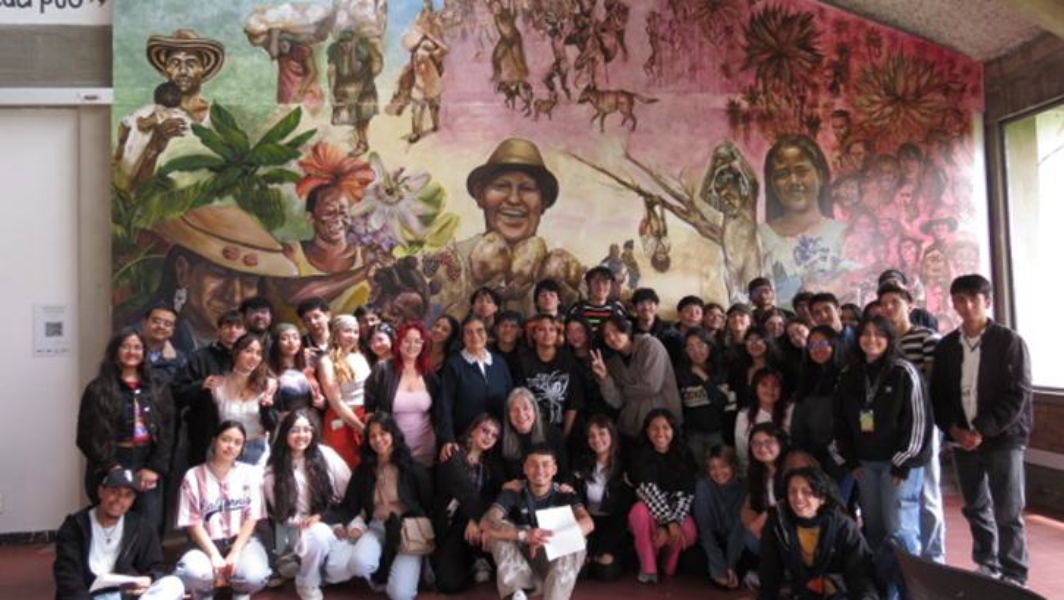
Figure 10.Illustration of aesthetic-artistic expressions by visitors (Karen Orozco Amado, Universidad Distrital Francisco José de Caldas)
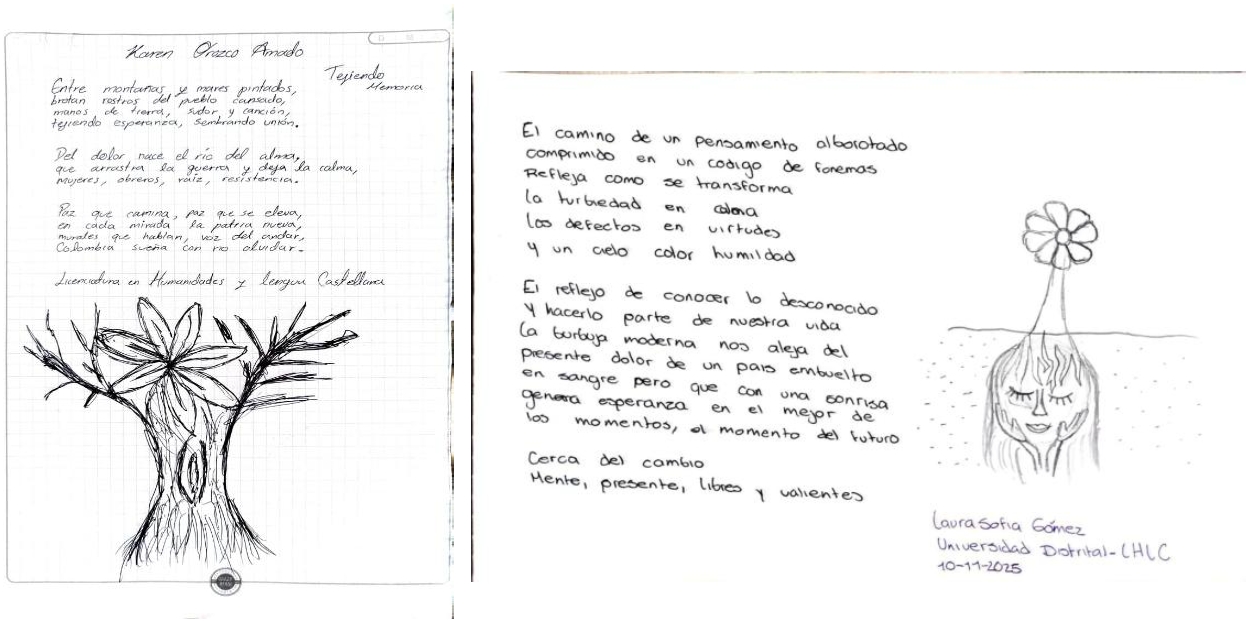
Figure 11.Young visitors from Pontifical Xaverian University (accompanied by Professor Luis Ospina)
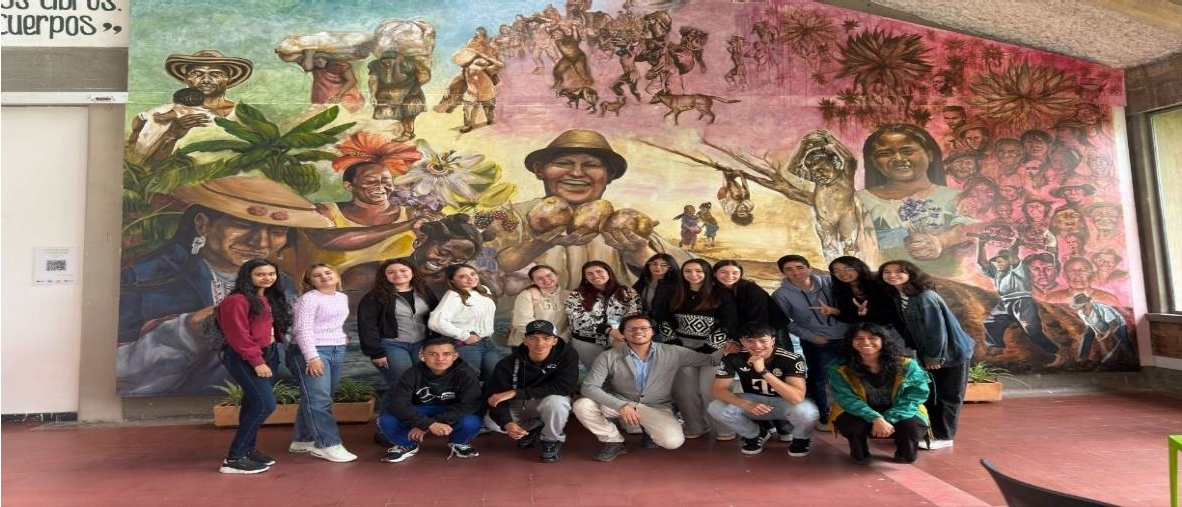
Figure 12.Industrial design students, NUC-Bogotá, intergenerational dialogue
REFERENCES
- Ahva, L. (2017). Practice theory for journalism studies: Operationalizing the concept of practice for the study of participation. Journalism Studies, 18(12), 1523-1541.
- Bakhtin, M. (2013). Problems of Dostoevsky's poetics. (C. Emerson, Ed. & Trans.). University of Minnesota Press. (Original work published 1963).
- Benaroyo, L. (2022). The significance of Emmanuel Levinas’ ethics of responsibility for medical judgment. Medicine, Health Care and Philosophy, 25(3), 327-332.
- Centro Nacional de Memoria Histórica (2015). Una nación desplazada.
- Comisión para el Esclarecimiento de la Verdad la Convivencia y la No Repetición. (2022). Informe final: Capítulo 5. Resistir no es aguantar. https://www.comisiondelaverdad.co/sites/default/files/descargables/2022-08/CEV_ETNICO_DIGITAL_2022.pdf
- Erll, A., & Hirst, W. (2023). Flashbulb memories: An interdisciplinary research programme. Narrative Inquiry, 33(2), 398-420.
- Food Agriculture Organization of the United Nations. (2020). Panorama de la seguridad alimentaria y nutrición en América Latina y el Caribe. https://openknowledge.fao.org/server/api/core/bitstreams/a7ce7e85-5486-45ab-8272-2113163dbc1f/content
- Hernández, L. (2020). Realismo simbólico y construcciones imagínales: A propósito de Gabriel García Márquez. Arkho Ediciones.
- Honneth, A. (2007). Reificación: Un estudio en la teoría del reconocimiento. Katz Editores. (Original work published 2005).
- Imran, M. H. (2025). Responsibility toward the “Other”: A critical examination of Levinas's ethical philosophy. Metaphilosophy, 56(5), 551-567.
- Laugerud, H. (2015). The sensory materiality of belief and understanding in late medieval Europe. In The saturated sensorium: Principles of perception and mediation in the Middle Ages. 247272.
- Lederach, J. P. (2022). Cultivating peace: A practitioner’s view of deadly conflict and negotiation. In Contemporary peacemaking: Peace processes, peacebuilding and conflict (pp. 43-53). Springer International Publishing.
- Levinas, E. (2015). Ética e infinito. Antonio Machado Libros. (Original work published 1982).
- Melianto, D., & Syamsudin, A. (2024). The role of arts in identity formation and collective memory in the digital age. Majority Science Journal.
- Mosquera, G, Marín, F, Stern, M, Bonnesoeur, V, Ochoa-Tocachi, B. F, & Román-Dañobeytia, F. (2022). Servicios ecosistémicos hídricos de los pajonales altoandinos: ¿Qué sabemos? Forest Trends. https://www.forest-trends.org/wp-content/uploads/2022/02/Servicios-ecosistemicos-hidricos-de-los-pajonales-altoandinos-Que-sabemos.pdf
- Peirce, C. S. (1974). La ciencia de la semiótica. Nueva Visión.
- Pelowski, M., Specker, E., Gerger, G., Leder, H., & Weingarden, L. (2018). Do you feel like I do? A study of spontaneous and deliberate emotion sharing and understanding between artists and perceivers of installation art. Psychology of Aesthetics, Creativity, and the Arts.
- Proceso de Comunidades Negras. (2015). Modelo conceptual y metodológico para la implementación de procesos de memoria histórica para comunidades y organizaciones afrodescendientes. https://centrodememoriahistorica.gov.co/micrositios/comunidades-etnicas/assets/pdf/Modelo-Conceptual-y-Metodologico.pdf
- Sperber, D. (1988). El simbolismo en general. Anthropos. (Original work published 1974).
- Terao, R. (1999). Historia y ficción en el realismo simbólico: La muerte de Artemio Cruz de Carlos Fuentes. Hispanica/Hispánica, (43), 160-171.
- Tunubalá, J. C. (2017). Parteras del pueblo Misak: Mujeres hilando conocimientos de vida y de re-existencia. Universidad del Valle. https://bibliotecadigital.univalle.edu.co/entities/publication/c9cf2c2e-ab65-43ac-ad8d-34669c529fd0
- Unidad para la Atención y Reparación Integral a las Víctimas. 2026. Reporte [Data set] https://datospaz.unidadvictimas.gov.co/registro-unico-de-victimas/
- United Nations Office for the Coordination of Humanitarian Affairs. (2025, March 21). Colombia: Informe de situación humanitaria 2025 - enero a febrero de 2025. https://www.unocha.org/publications/report/colombia/colombia-informe-de-situacion-humanitaria-2025-enero-febrero-de-2025-publicado-el-21-de-marzo-de-2025
- Ward, A. K., Groves, C., & van der Duin, P. (2024). Johan Galtung: Reflexivity, creativity, and imagination. Futures, 164Article 103475.
- Zu, C. (2024). Levinas on face: A preliminary exploration of Levinas’ ethical phenomenology. Lecture Notes in Education Psychology and Public Media, 35https://doi.org/10.54254/2753-7048/35/20232147
Figure & Data
Citations
Citations to this article as recorded by