It is known that poem"Aryman i Oromaz" is part of the cycle "Eastern Flowers" by the Polish poet. Along with other works of the cycle, which provide poetic translations from Arabic poetry, this poem is dedicated to a fragment from the French translation of the Avesta, describing the history of the creation of the world, the cosmogonic views of the Zoroastrians on the structure of the world. Mickiewicz, who has certain ideas about the content of the sacred book, tries to recreate the primary picture of the religious tradition for the Polish reader. This topic is important for Mickiewicz to assert the thesis of the triumph of good over evil, which is close to him and lived by him. In other words, by addressing the plot of a foreign ancient religion, the poet expresses the identity of the postulates of Zoroastrianism with his life and personal views. Analysis of the text of the work shows that the Polish poet adheres to the plot of the French translation, creating his own vision of the problem, confirming the moral values that follow from the source material. Some elements of the work, reflecting the main concepts of the translated text, suggest that Mickiewicz initially planned to translate the text into Polish, and in the process of translation, individual interpretation took over. Thus, the poem should be perceived as a recreation of the text, interpreted in a new artistic context.
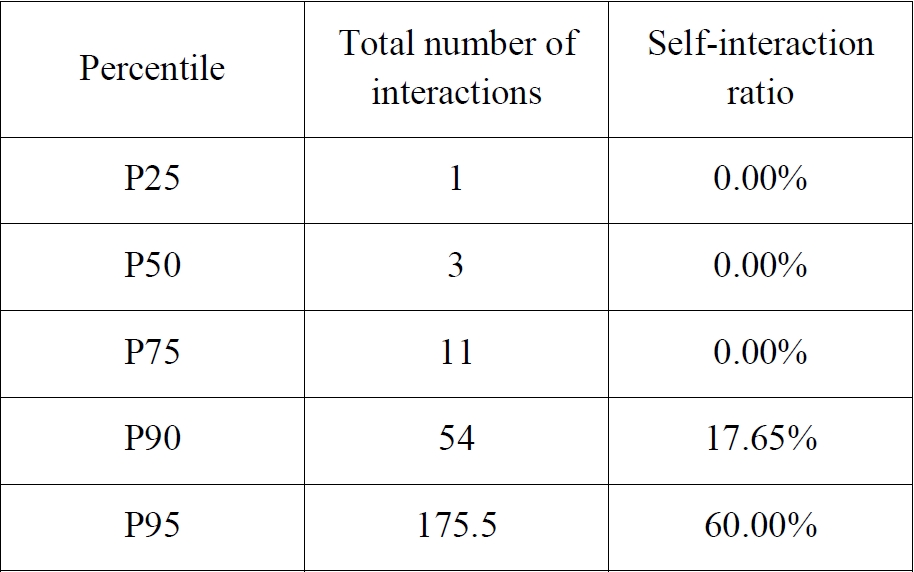
Our study proposes a socio-relational approach intended to inform the training of an artificial intelligence system for botnet detection. First, a corpus of accounts likely to be automated was assembled using individual criteria defined by the Beelzebot team (Brachotte et al.). These accounts were then analysed through their interaction dynamics in order to identify relational configurations that could serve as relevant signals for automated detection. The article presents a socio-relational analysis based on a three-step protocol: (1) identifying forms of self-interaction; (2) examining internal interactions among suspected accounts; and (3) analysing their external interactions with third-party actors. Conducted within the framework of the ANR Beelzebot project, which aims to develop the first French-language solution capable of detecting information manipulation strategies deployed by automated networks in the French-speaking X-sphere, this research constitutes an exploratory phase designed to calibrate the data-preparation methodologies required for training an AI model that integrates socio-relational indicators. In addition to producing a quantitative score, our model aims to provide a complementary qualitative output that offers insight into the characteristics of the botnet and the functional roles occupied by different bot profiles within the network. From an ethical standpoint, this approach contributes to the development of a more explainable AI model.
This study analyzed the Harry Potter-Balenciaga meme to explore the impact of new memes generated by Generative Al technology on online meme culture. The concept of memes, introduced by Richard Dawkins in ''The Selfish Gene” as units of cultural information, has evolved into contemporary internet memes, becoming a significant element of online culture. The Harry Potter-Balenciaga video, created using Al technology in 2023, garnered significant attention as an innovative online meme, demonstrating an epistemological expansion in the realm of online memes. It transcended the limitations of traditional meme creation by realizing abstract ideas, leading to the emergence of a new meme genre, the 'Idea Meme.' This study captured this phenomenon by considering the Harry Potter-Balenciaga meme as a new genre. It discussed the meme as an Idea-Realizing Meme, based on Shifman's (2016) traditional meme classification, through semiotic analysis of the images and text. By analyzing the three dimensions(content, form, and stance) of the Harry Potter- Balenciaga meme from a semiotic perspective, the study explained how AI-generated memes overcome the limitations of traditional memes and expand communicative and epistemological possibilities. This research aimed to shed light on the impact of the fusion of Al technology and online digital culture on cultural life and contribute to digital culture studies and online communication research.
Citations
Citations to this article as recorded by
De la pasarela al meme Susana Golf Sanchez, Ana Belén Bastidas Manzano, María Alcolea Parra SOCIAL REVIEW. International Social Sciences Review / Revista Internacional de Ciencias Sociales.2025; 13(2): 133. CrossRef



 First
First Prev
Prev